 +86 173 2132 8732
 support@altabelt.com
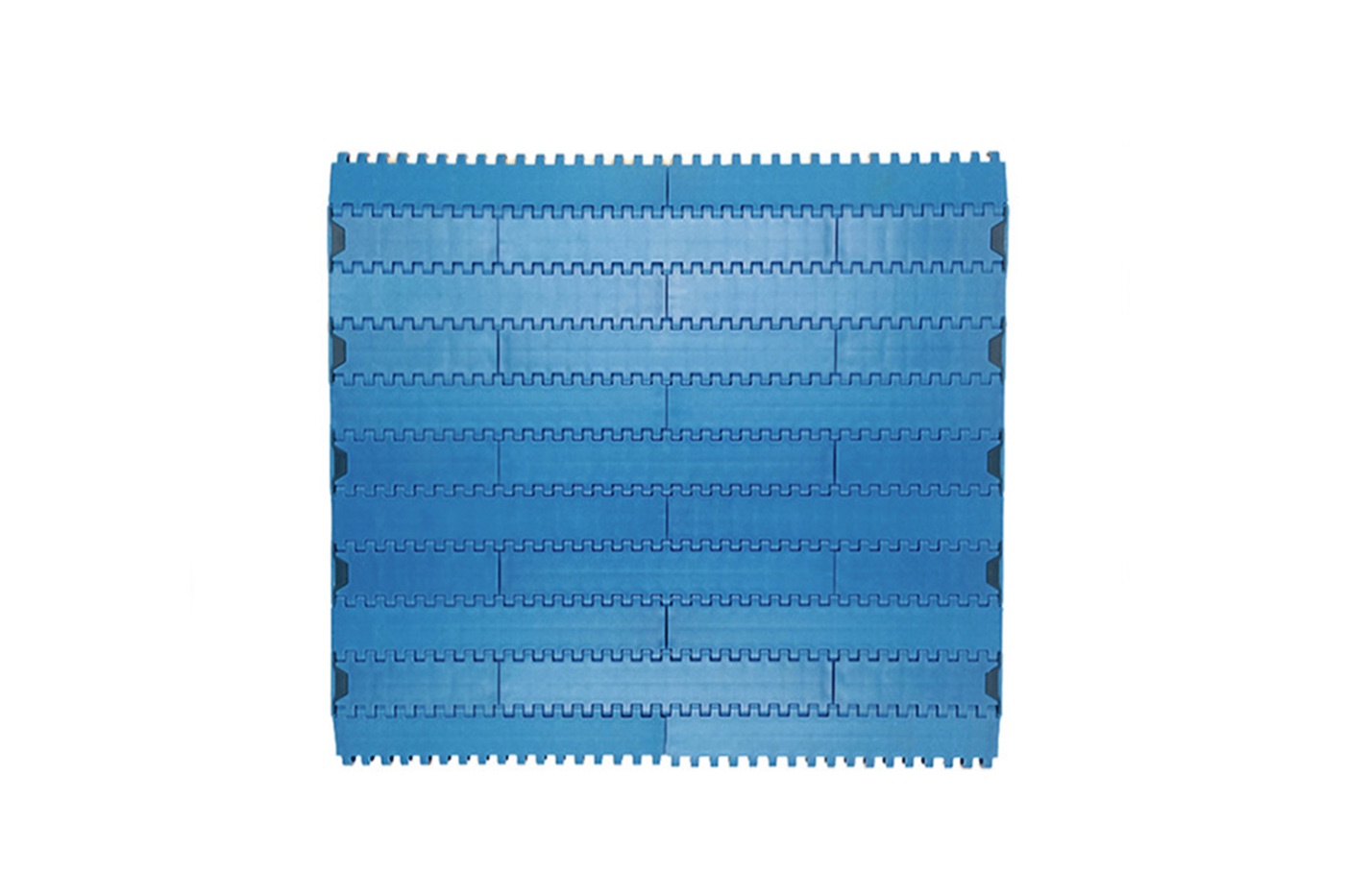
FEATURED BELT
CY-25401A · Flat top
Flat-top modules provide continuous support between downstream packaging machines. Define width and speed from can size, spacing and throughput.
Closed carrying surface
Product specifications ↗
Shanghai Caiyang Plastic Products Co., Ltd. is a manufacturer of modular plastic belts, conveyor chains and related components, founded in 2010 in Songjiang, Shanghai.
Our product range spans flat-top, flush-grid, radius and ball-top belts, alongside chain and conveyor components. Mold engineering and technical support connect this range with the needs of food, tyre and corrugated-board applications.
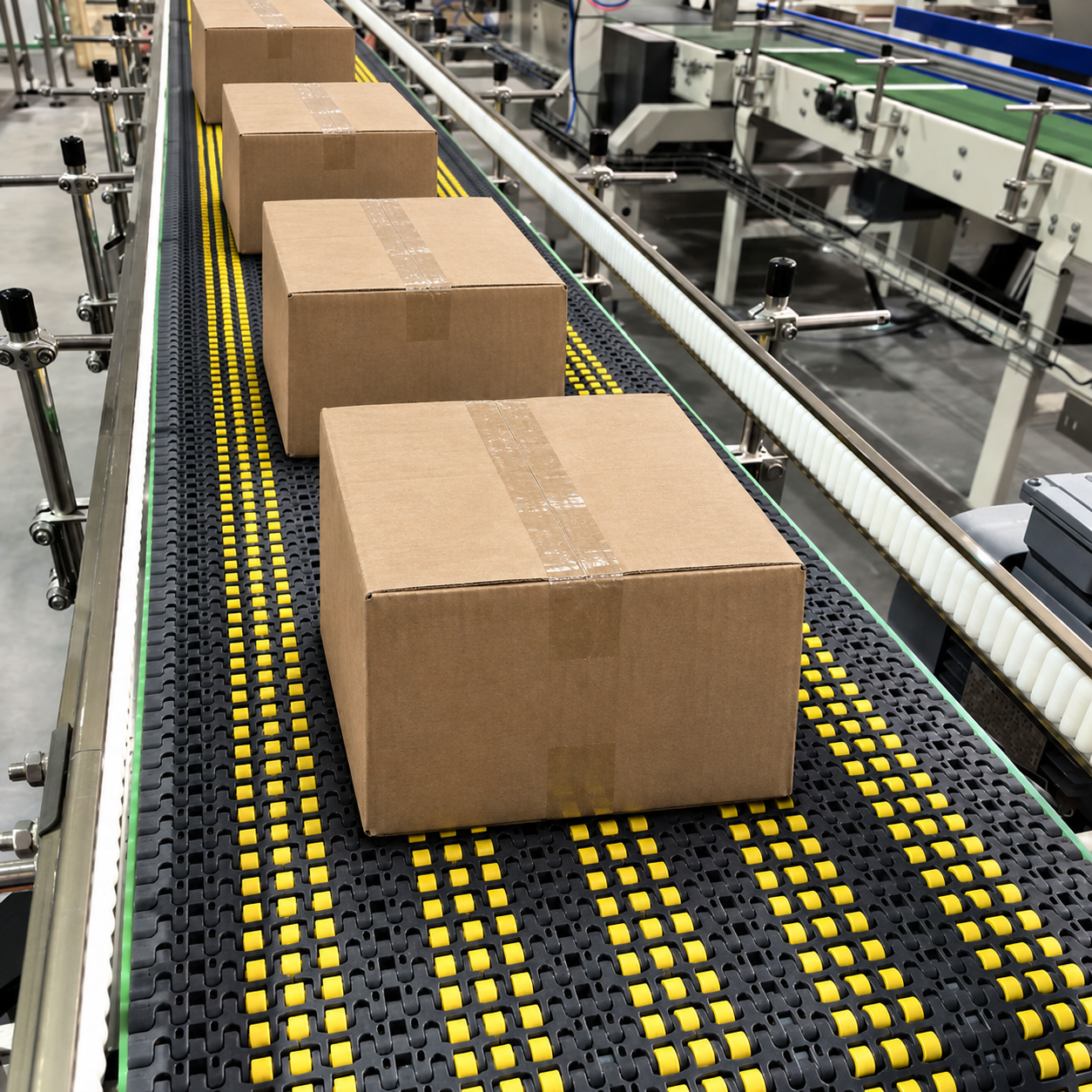
Our cooperation includes food brands, tyre manufacturers and corrugated-equipment businesses. Their industries bring different requirements for hygiene, load handling and machine-to-machine transfers.
Meat · Snacks · Milk powder
Tyres · In-plant handling
 Passenger tyres
 Tyre manufacturing
Corrugating · Converting
 Corrugated-board equipment
Choose by what each stage needs to do. The belt surface, module structure, sprockets and supporting layout together determine the conveying arrangement.
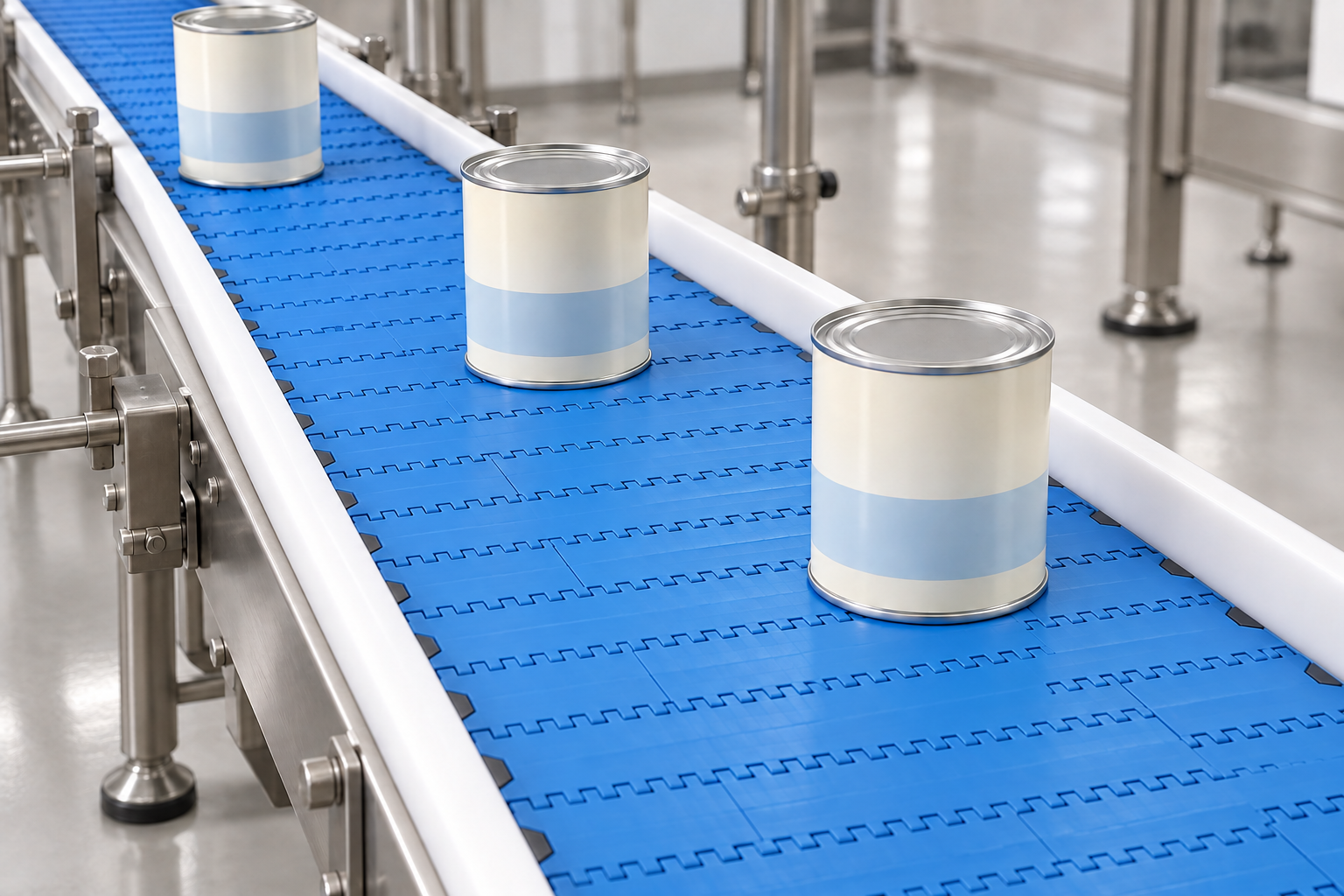
After closing, CY-25401A flat-top belts provide continuous support for milk powder cans, with side guides for stability. CY-15200A small-pitch belts are a separate option for stations that need smaller transfer gaps.
Flat-top modules provide continuous support between downstream packaging machines. Define width and speed from can size, spacing and throughput.
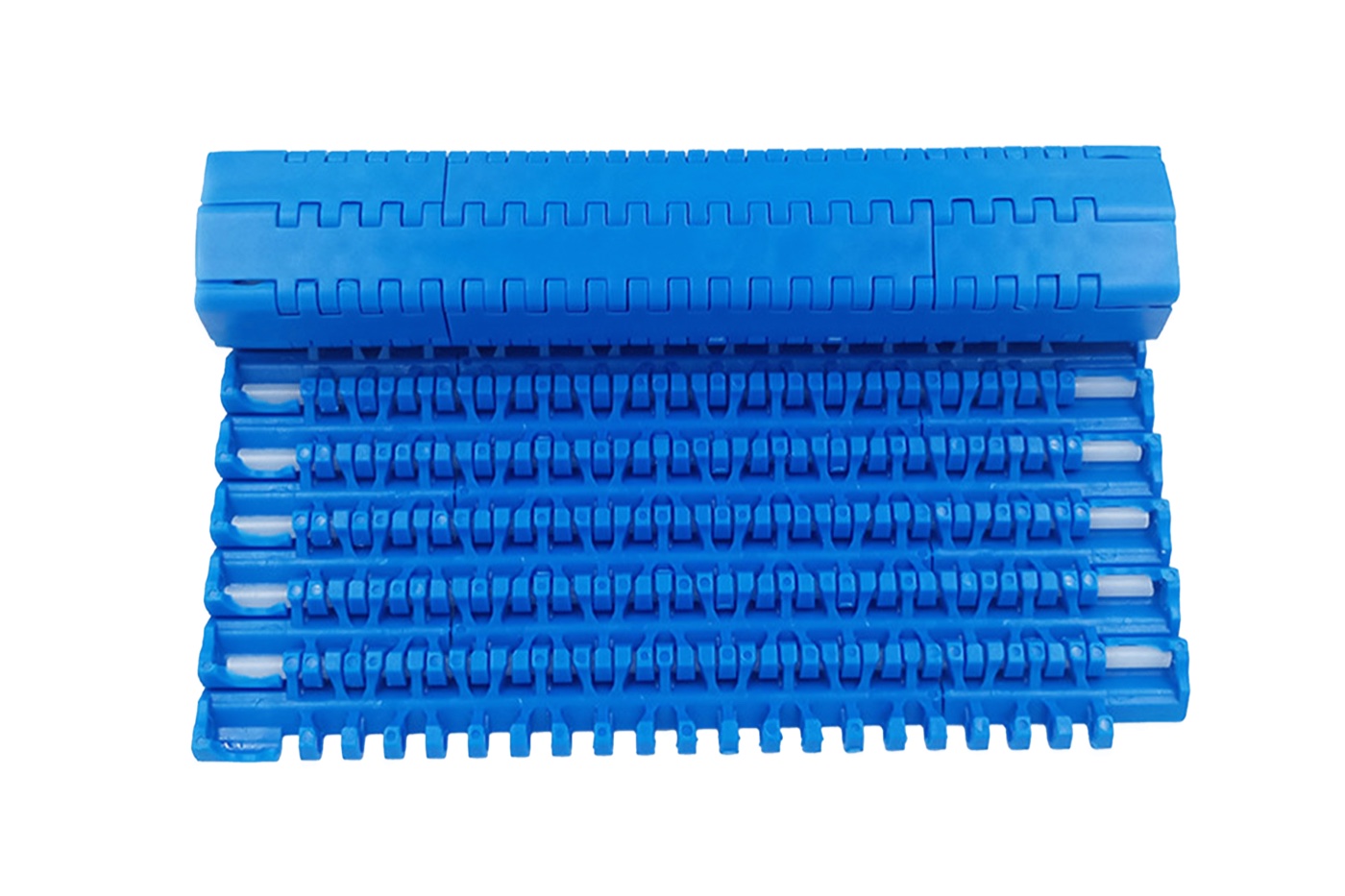
A small-pitch, closed carrying surface for upright sealed cans. Confirm can-base diameter and transfer gaps to keep each can supported.
Set guide clearance for the can diameter; align belt elevation and transition parts between machines. Check pitch, sprocket engagement and shaft interfaces together.
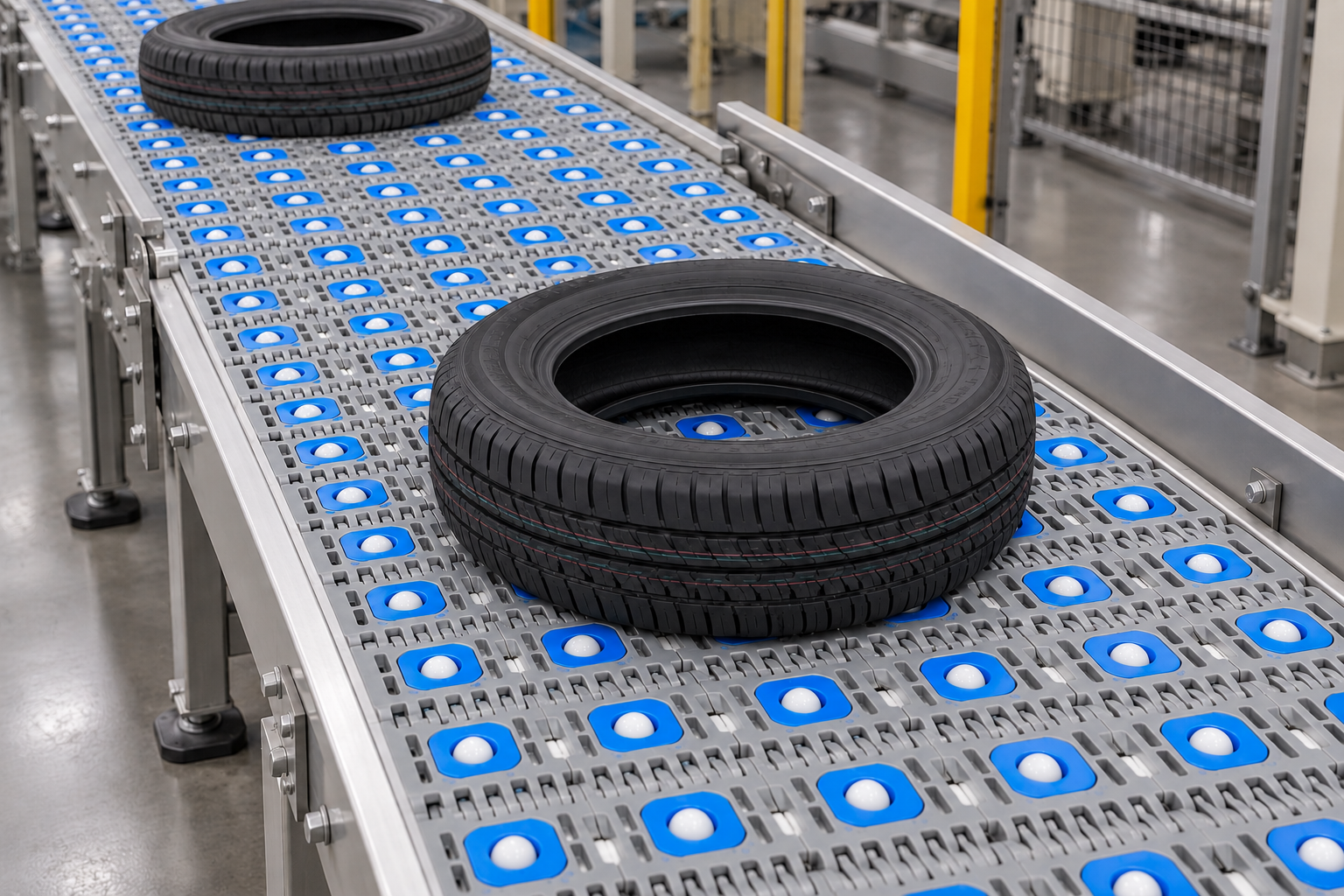
CY-50804Q ball-top modules serve tyre-handling stations that need rolling contact. Select for tyre weight, temperature and transfer requirements; flat-top belts are a separate option for ordinary carrying sections.
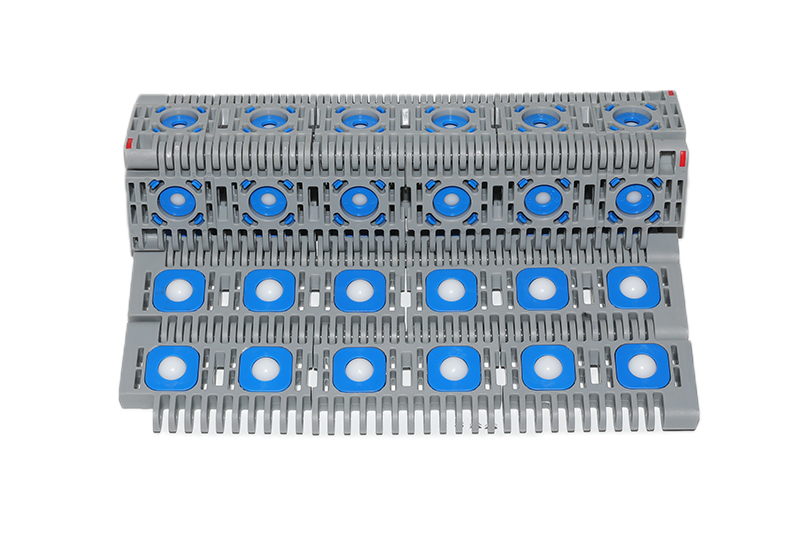
Ball-top modules provide a rolling contact surface for transfer and sorting layouts, coordinated with the transfer mechanism.
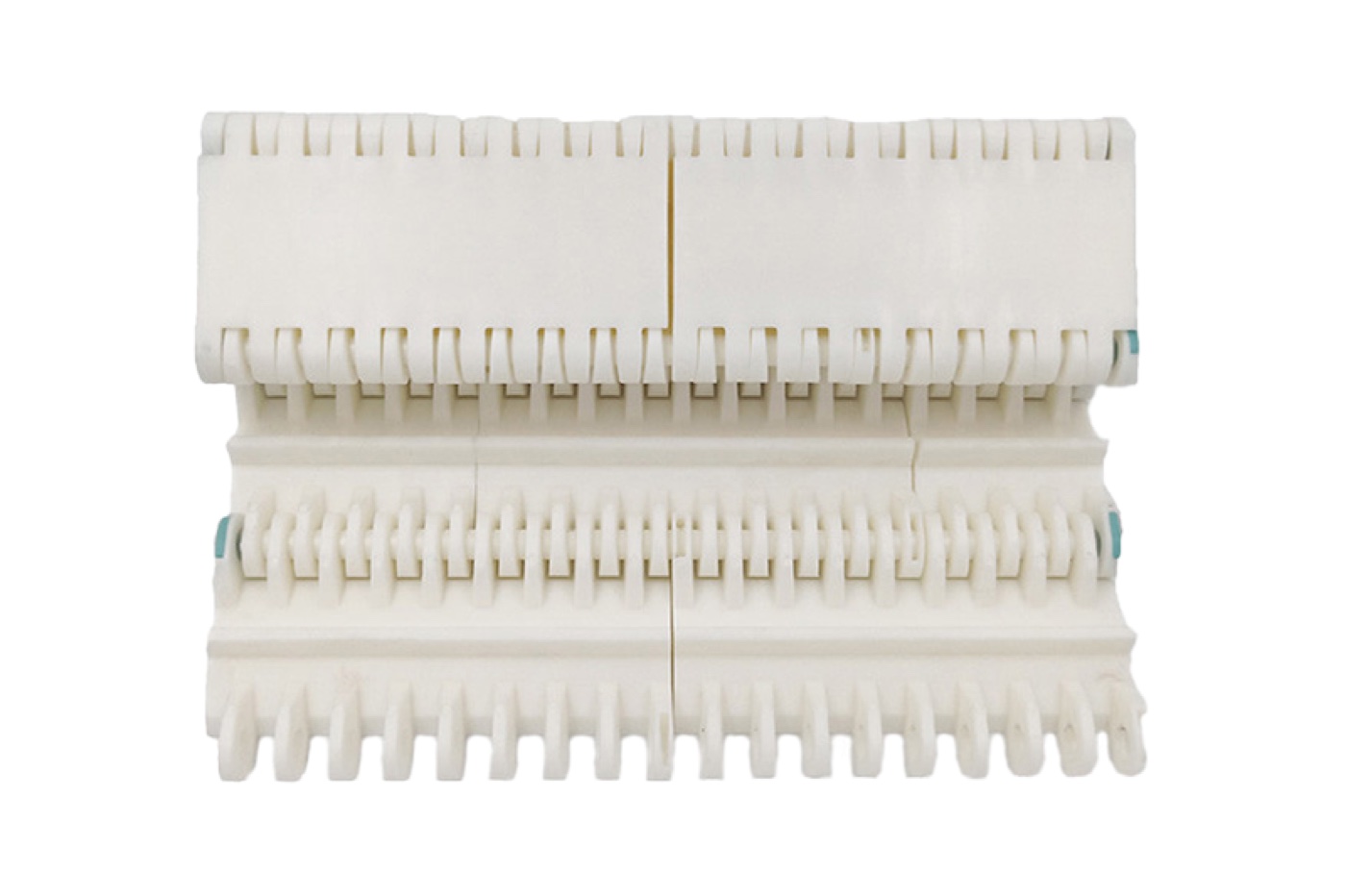
A closed carrying surface for straight conveying. Material and belt width are selected for tyre weight, temperature and speed.
Pitch, tooth geometry, bore and shaft arrangement must work together. Side guidance follows tyre size and the transfer layout.
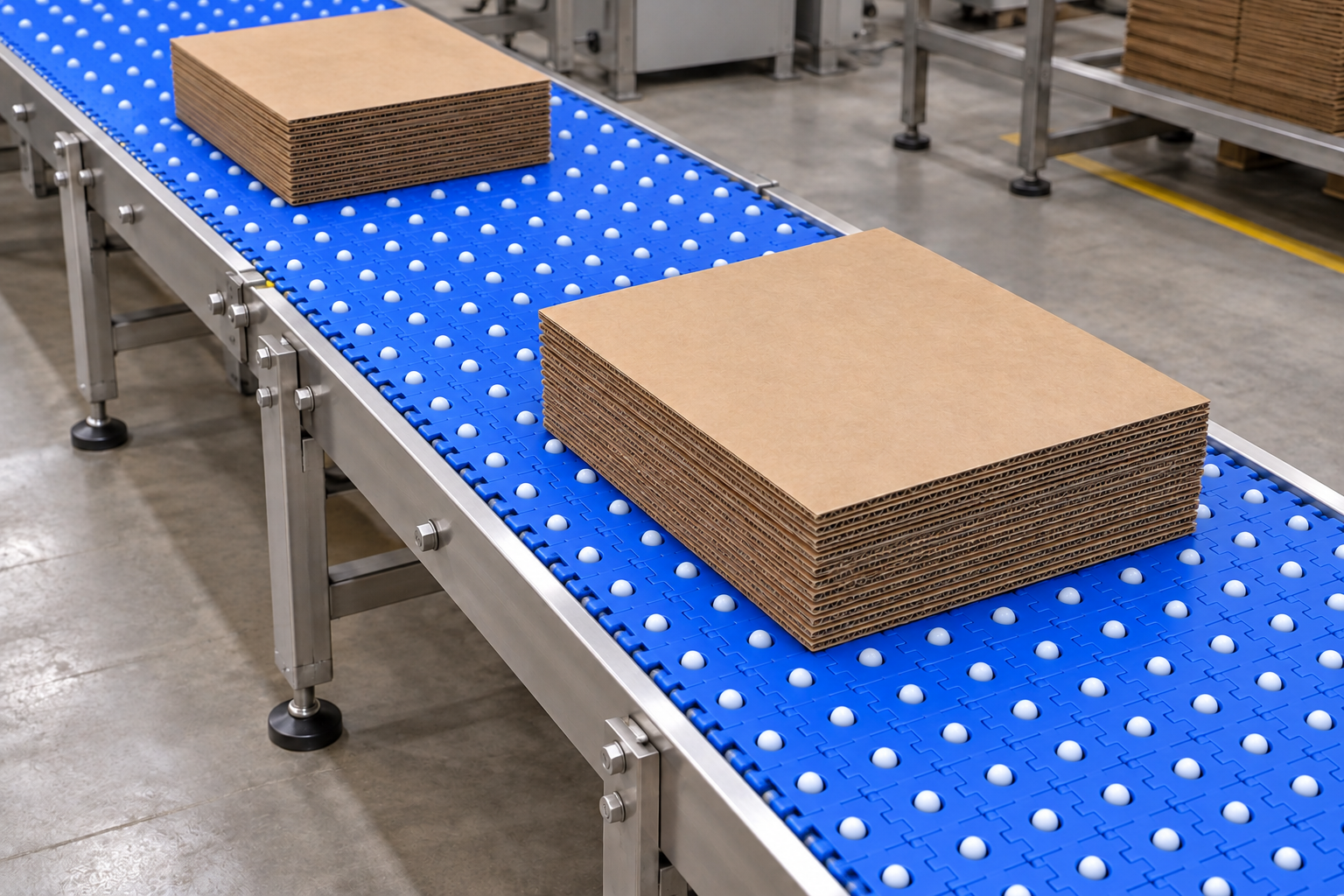
CY-25409GZ ball-top belts serve stack-handling stations that need rolling contact. Check stack weight, bottom-sheet condition and support layout. CY-25409A flat-top belts are a separate option for carrying sections.
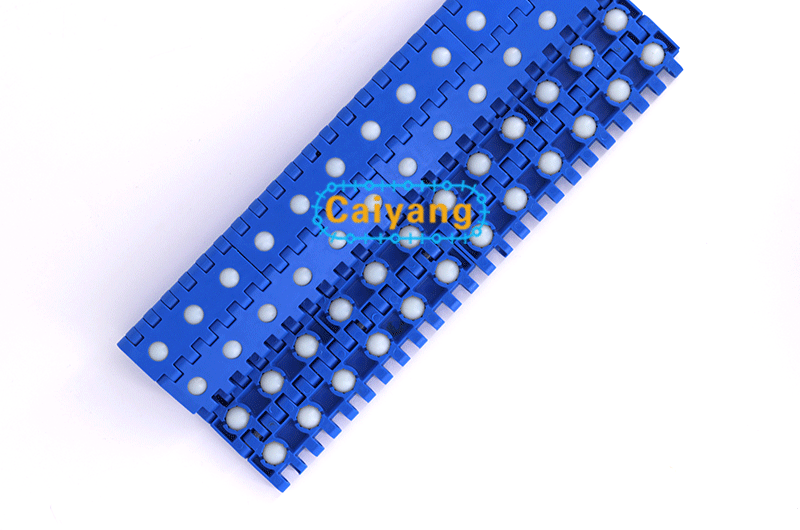
For rolling-contact transfer sections, coordinated with the flat-top carrying section and the required transfer mechanism.
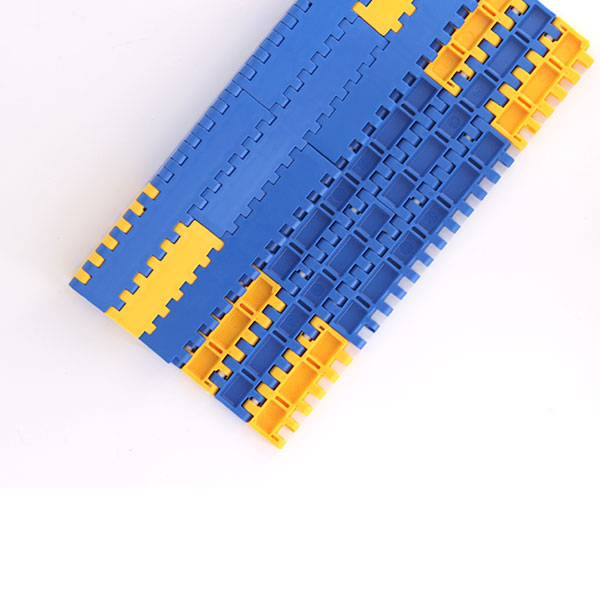
A closed-surface belt in the corrugated-board range, with a modular width layout for supporting board stacks.
Coordinate drive engagement, support layout and the transition gap to keep board stacks supported between machines.
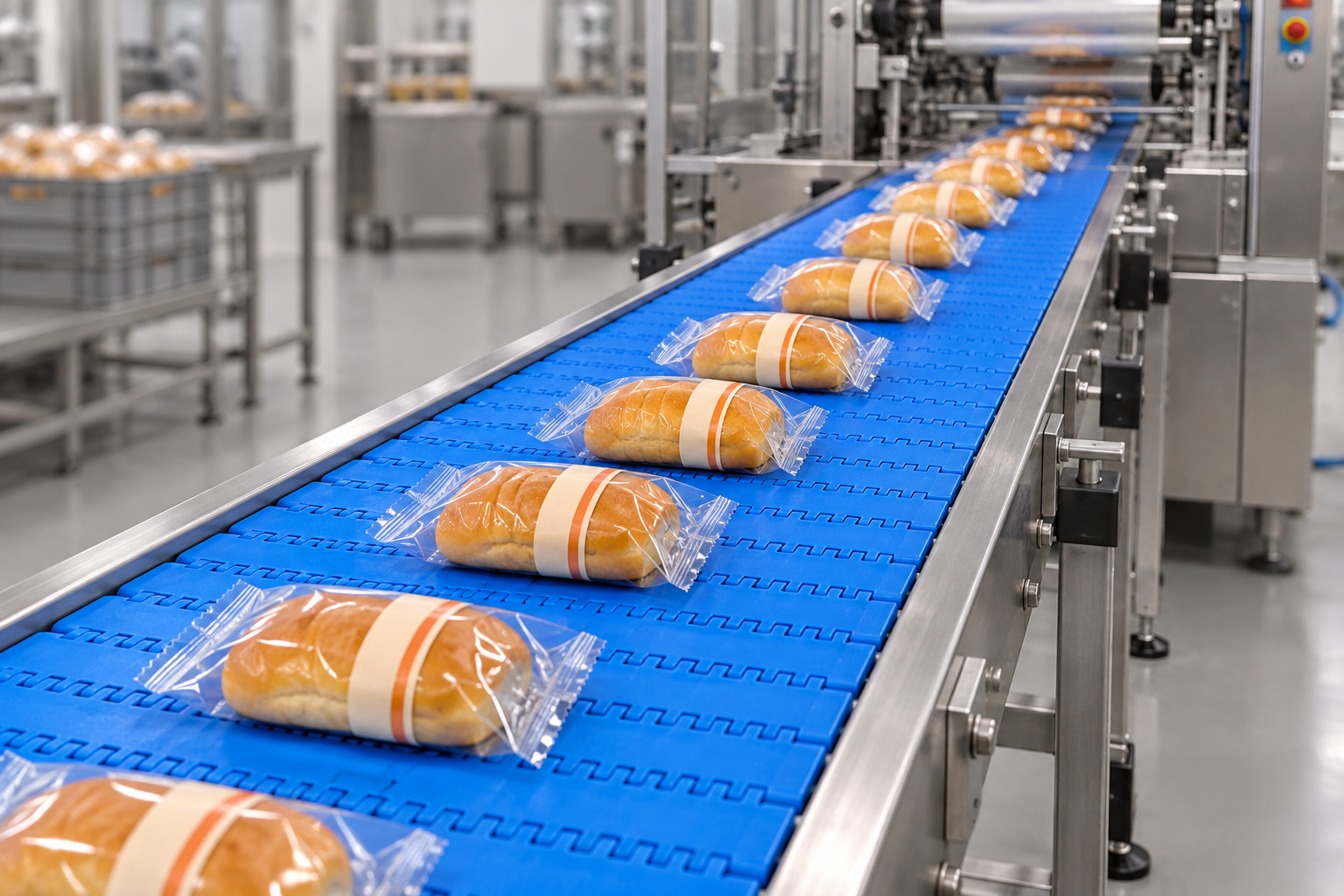
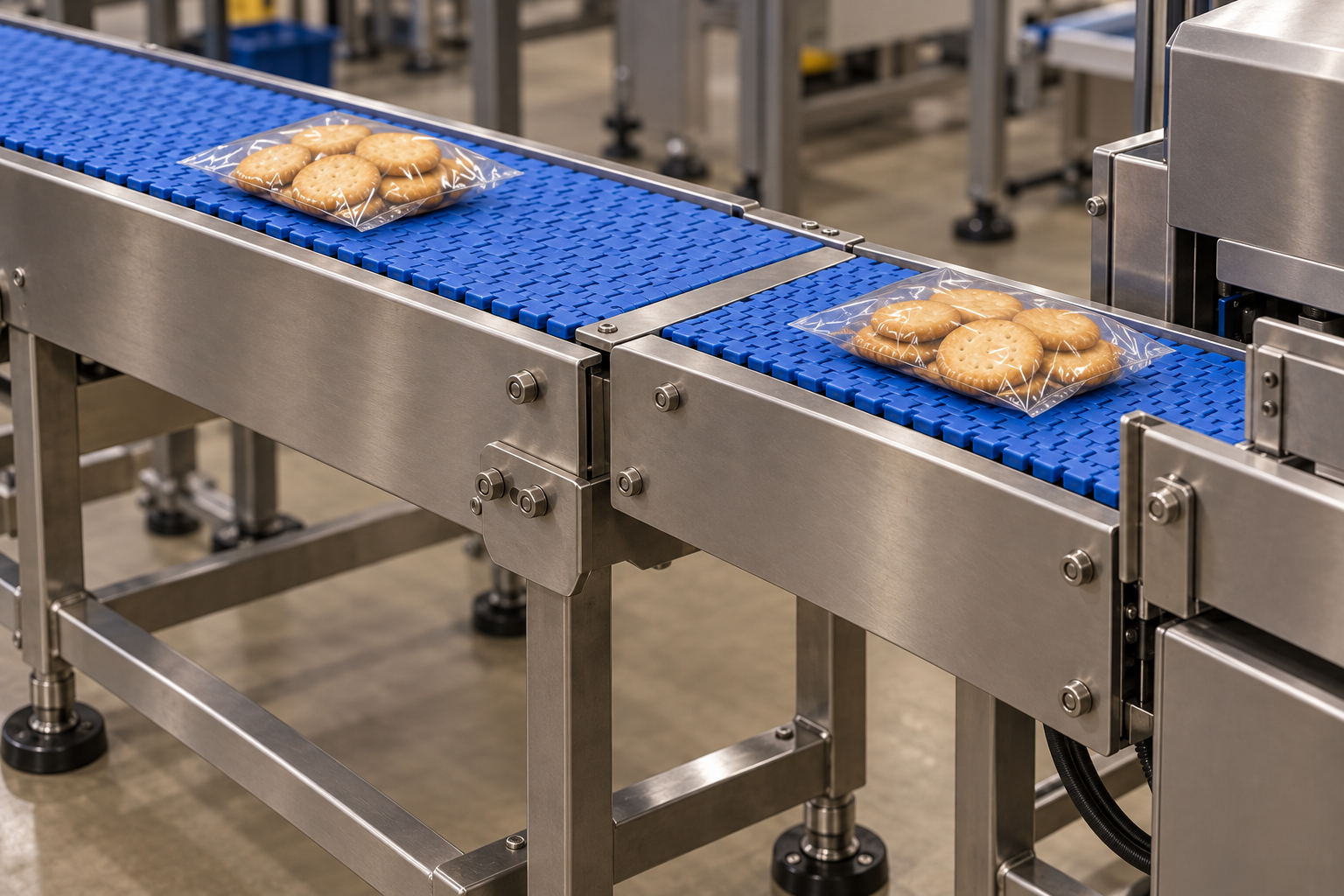
Individually wrapped rolls and biscuits need stable support and smooth transfers. The scene uses CY-15200A small-pitch flat-top belting. Pack footprints, film seals and throughput guide the choice of transfer gaps and side guides.
A closed surface supports small packs. Check transfer gaps against pack dimensions and flexible film seals to reduce snagging or dropping.
For separate sections handling larger packs or feeding case packing, select against pack dimensions, arrangement and support conditions.
Side guides maintain pack direction. Match transfer parts and sprockets to the belt and station height, allowing clearance for flexible film seals.
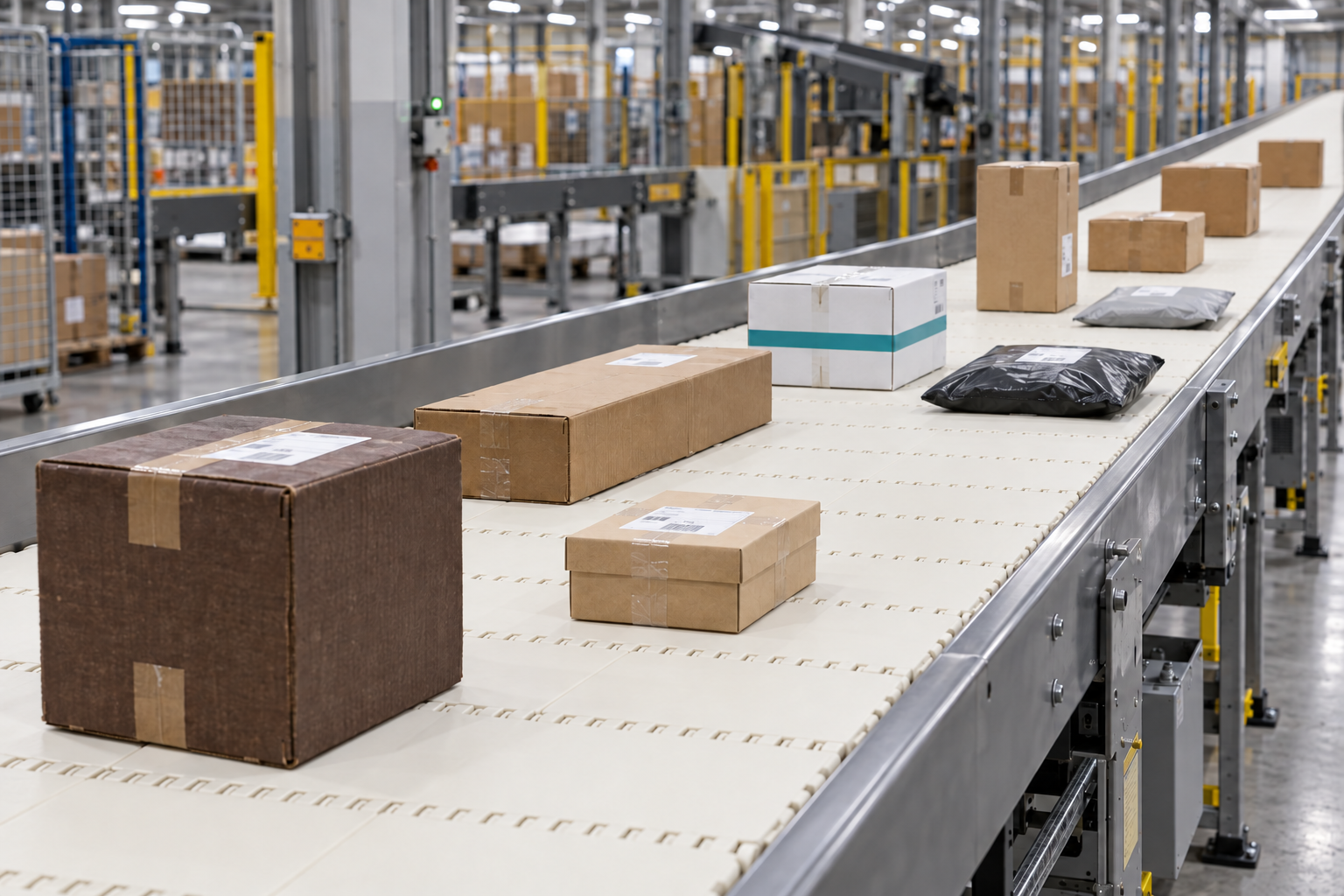
Cartons, retail boxes and soft mailers have different footprints and centers of gravity. This scene shows CY-50801A flat-top belting in a straight conveying section. Check belt width, drive and transfers against the smallest parcel, maximum weight and throughput.
A closed surface for evaluating straight conveyor sections. Check material, drive and under-belt support against weight distribution, conveyor length and speed.
For separate small-parcel transfer sections, evaluate a smaller pitch against the minimum parcel footprint and transfer conditions.
Allow clearance for large parcels while protecting small items and mailers at the edges. Match sprockets, shafts and under-belt support to the sorting equipment interfaces.
The work extends beyond a model number: fit, tooling, performance and production planning each affect how the finished product will be used.
Our mold engineering team develops around customer requirements. Flexible production arrangements and after-sales technical support carry that work from a product specification to installation and continued use.
Start with belt pitch, width, hinge construction and the existing sprocket. Include tooth geometry, shaft bore and transfer gaps in the comparison so the replacement is defined as a combination of parts.
Our mold engineering team supports customer-specific requirements. A drawing or sample establishes the geometry; material, dimensions and assembly requirements define the scope of development.
Material choice and key dimensions are the starting point. Tensile, wear-resistance and impact testing address different performance questions, alongside checks on the selected product and its components.
Model, material, belt width and quantity define standard work. Custom work adds drawing and tooling confirmation. For urgent orders, the technical scope and production schedule are checked before an expedited arrangement is agreed.
Quality work connects the selected material and geometry with the forces, wear and impacts encountered in service.
We value a shared understanding of the application, coordination between components and support that continues into use.
Every application has its own priorities. We work to understand the process and the equipment around it, so that a product choice addresses the operating need.
Belts, drive components and machine interfaces affect one another. Working with customers and equipment partners helps keep these choices consistent.
Needs evolve as equipment stays in service. We support continued use, component replacement and later adjustments through ongoing technical communication.